The SBA Acquisition Capital Stack After October 2026
SOP 50 10 8.1 can reduce an acquisition loan. Three illustrative scenarios show where cash, seller notes and investor equity fit.
The Modern Acquirer
Sourcing, diligence and financing for searchers, independent sponsors and first-time acquirers, written from the buyer's side of the table.
Selected topics: risk-management. Search: All guides.
Showing 10 posts with tag: Risk management
SOP 50 10 8.1 can reduce an acquisition loan. Three illustrative scenarios show where cash, seller notes and investor equity fit.
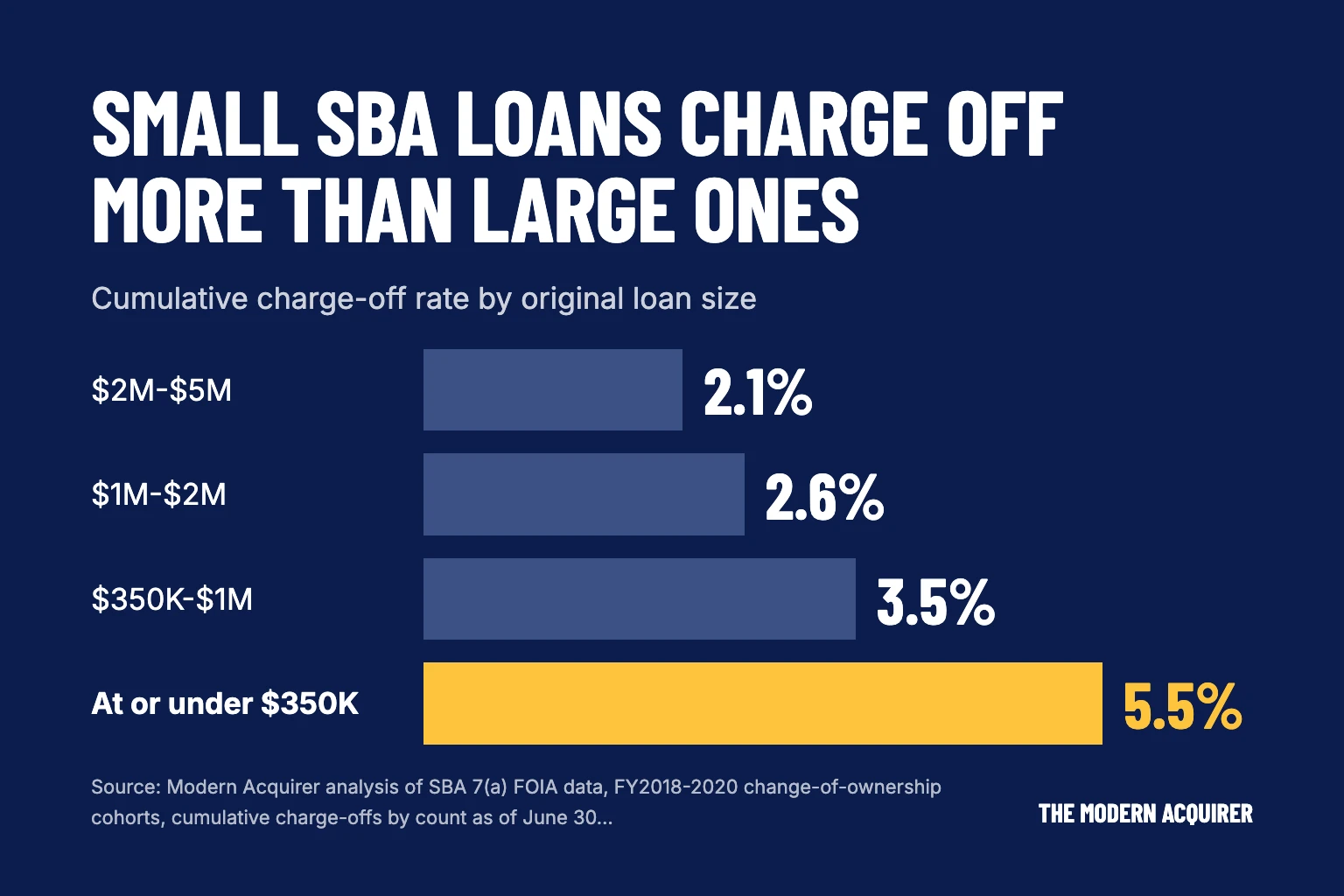
A full pass over SBA loan-level data: how big acquisition lending got, who lends, which loans fail, and what to watch around the October 2026 rule change.
Business acquisition due diligence tests whether earnings, customers, cash and key people survive the sale. Here is what to check before you own it.
Prepare for business acquisition financing by clarifying personal exposure, operating cash needs, and seller priorities. Build your lender and seller questions.
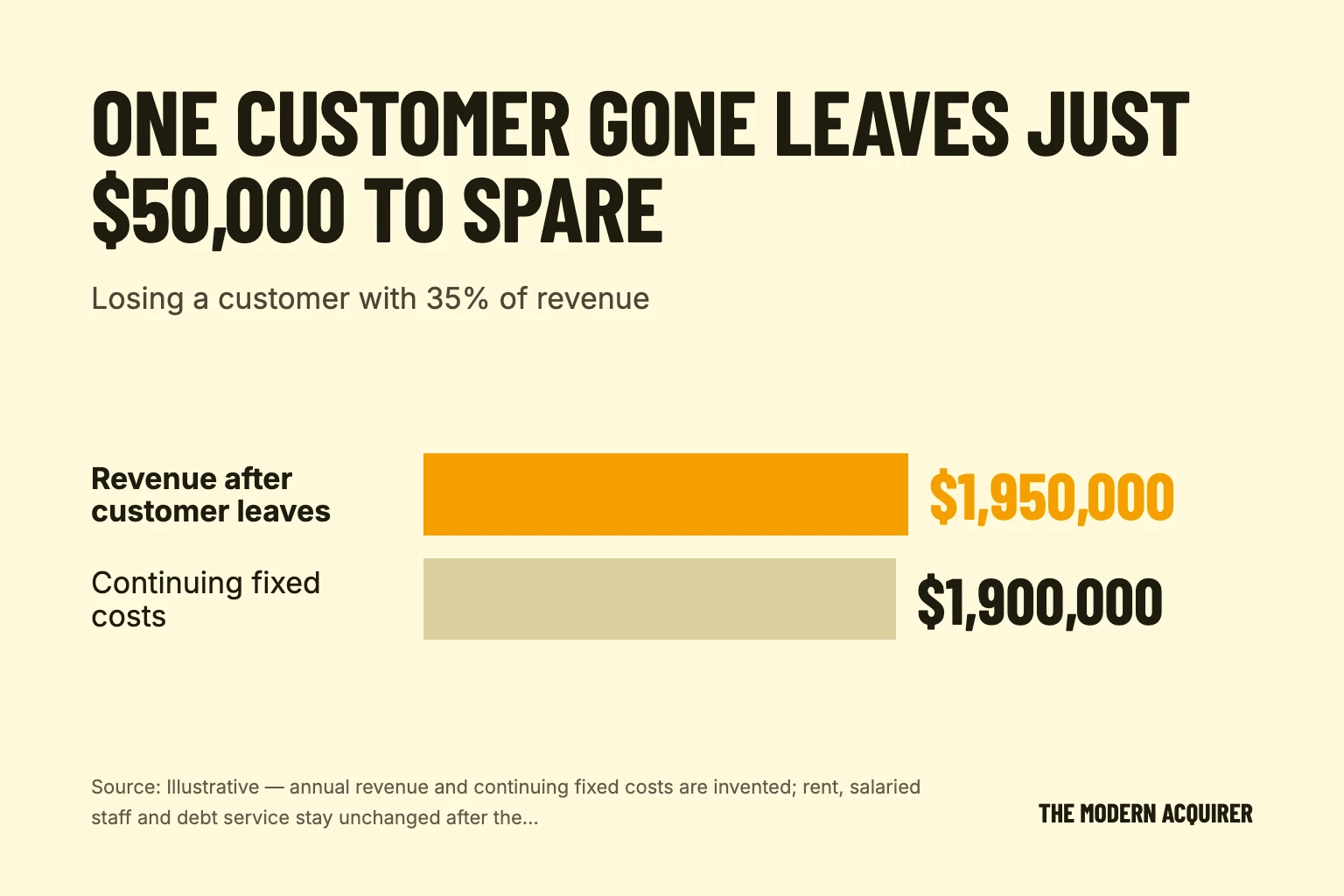
Customer concentration due diligence: why the biggest customers buy, who keeps them, and who wins new work once the seller leaves.
Build an acquisition transition plan that connects diligence findings to operating questions, responsible roles, and records. Use the blank worksheet to start.
Quality of earnings for small business buyers covers only what the engagement tests. Some reviews skip outgoing cash, and buyers grade their own deals kindly.
Revenue quality due diligence checks receipts, customer habits, seller dependence and project timing, because reported sales may not survive the sale.
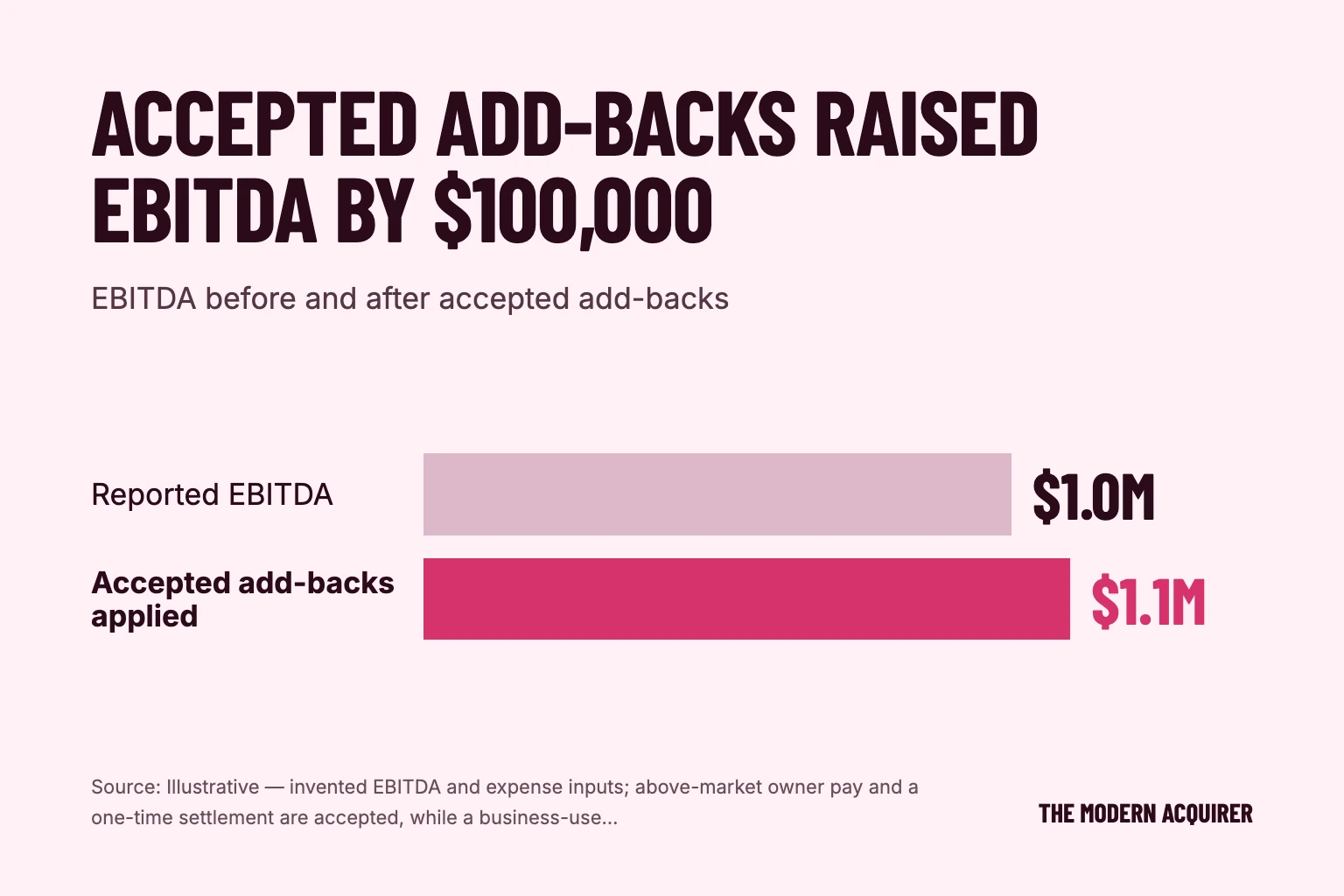
Review seller add-backs for missing support, changing costs, and owner responsibilities. Mark uncertain savings for an accounting review before buying.
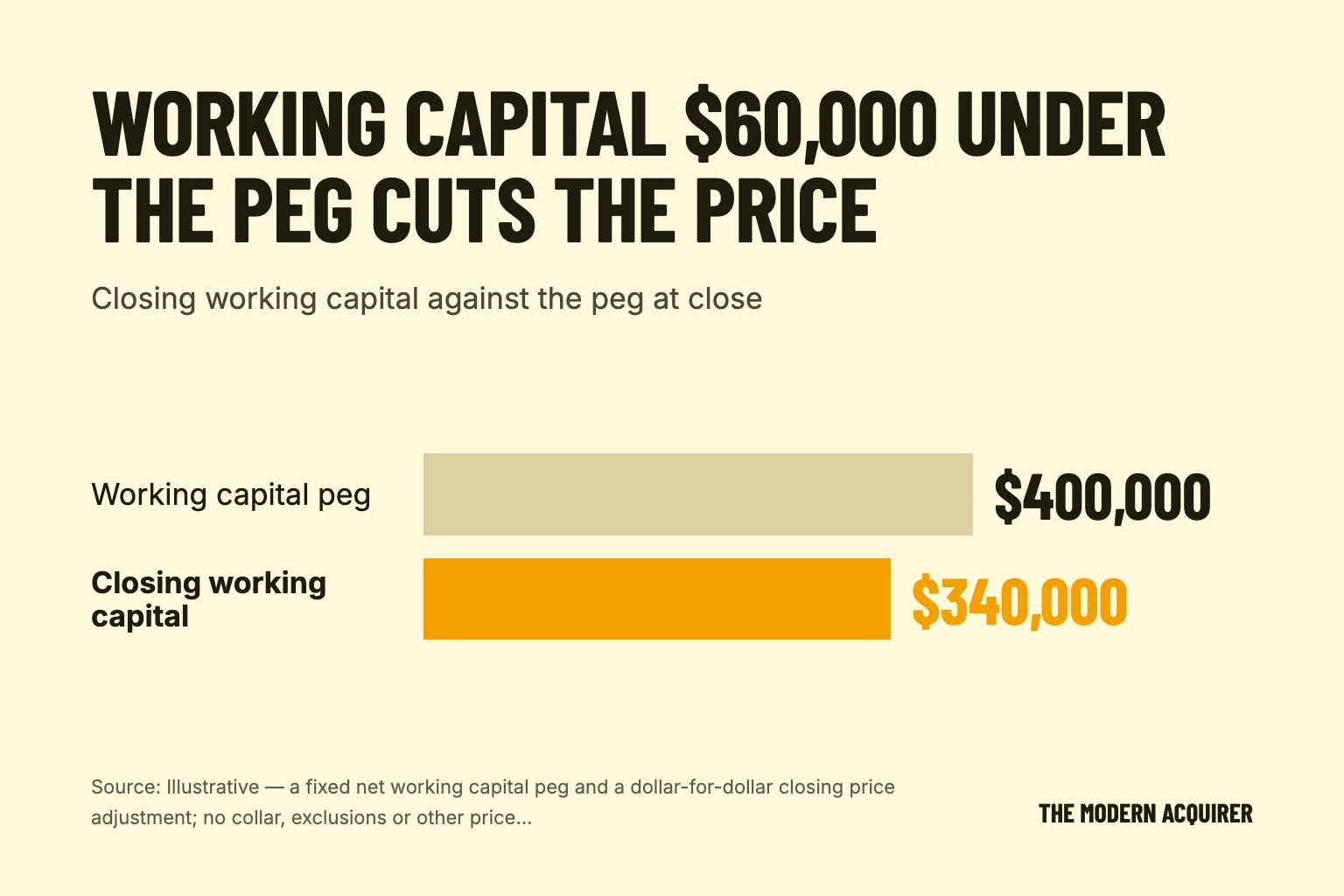
Working capital due diligence checks the resources behind earnings. Review receivables, inventory, seasonality, and cash timing before taking over a business.